Aluminum cans: |
 |
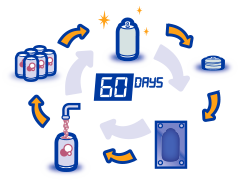
These are crushed and then baled into a large block. Then transported in bales that weigh over 20 tons and contain over 1.2 million containers. These bales are sold as a commodity and the aluminum is melted down and reformed into more aluminum cans. This entire process only takes 60 days before the old container is recycled, refilled, and back on the store shelf. |
PET (clear plastic): |
 |
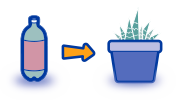
Clear plastic beverage containers are baled, shredded and the plastic flakes are sold as a commodity. Most of the plastic that Encorp collects is used to make new bottles for things like motor oil or bleach. |
Glass: |
 |
These containers are collected and the glass is crushed into pieces that can then be ground back into sand, which is what glass is made of. The sand is then sold for use as mix in sandblasting material or it's made into fibreglass used to insulate homes. |
Aseptic or Tetra pac: |
 |
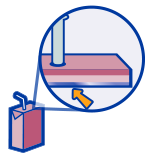
Drink boxes are made up of three material types: paper, an aluminum lining, and a plastic coating. Each container goes through a hydra-pulping process that separates the different material types. The resulting paper pulp is then used to make cardboard boxes of all shapes, sizes and colors, as well as toilet paper. |
Bi-metal: |
 |
Beverage container metal tins and cans are baled and then melted down to be turned into scrap metal, which can then be used as construction re-bar. |
Bag-in-a-box: |
 |
For bag-in-a-box containers, they just pull out the plastic bag and recycle the bag and the box separately. Manufacturing the pulp from bag-in-a-box containers is fairly coarse, so the new paper made from it is quite strong. That makes it suitable for tough objects like cardboard boxes. |
Gable Top: |
 |
Gable top cartons are made only of paper and plastic. Each container goes through a hydra-pulping process that separates the different material types. The resulting paper pulp is then used for all kinds of industrial paper products. |